What Is Image to 3D?
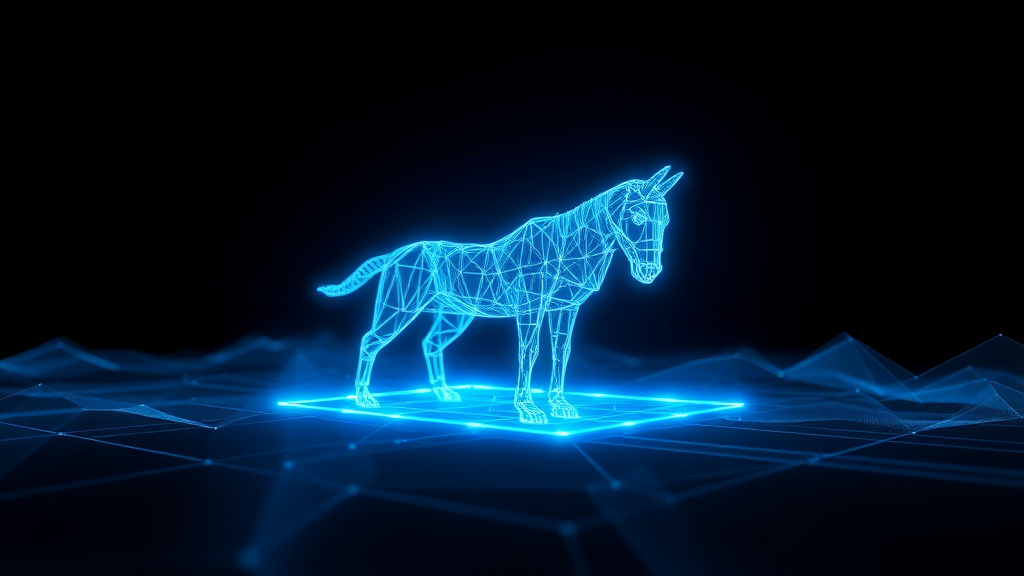
Imagine taking a simple photograph or illustration and transforming it into a fully-realized three-dimensional model ready for games, virtual reality, or 3D printing—all in a matter of seconds. That's exactly what Image to 3D technology makes possible. This innovative AI-powered tool bridges the gap between 2D imagery and 3D creation, eliminating the need for complex modeling software, expensive equipment, or specialized technical skills.
The Image to 3D converter on Luxoret harnesses advanced artificial intelligence to analyze your uploaded images and generate detailed 3D models that you can download in industry-standard formats like GLB and OBJ. Whether you're a game developer needing quick asset prototypes, a product designer visualizing concepts, an educator creating interactive learning materials, or a hobbyist exploring 3D printing, this tool democratizes 3D content creation in ways that were unimaginable just a few years ago.
What makes this tool particularly valuable is its accessibility. You don't need to understand topology, UV mapping, or polygon counts. Simply upload an image, let the AI work its magic, and download a ready-to-use 3D model. It's available completely free on Luxoret.com, making professional-grade 3D conversion accessible to everyone from students and hobbyists to established professionals and businesses.
Key Features
- Instant AI-Powered Conversion: Upload any image and watch as sophisticated AI algorithms analyze depth, contours, and visual information to generate a complete 3D model in seconds, not hours.
- Multiple Export Formats: Download your models as GLB or OBJ files, ensuring compatibility with virtually every 3D application, game engine, 3D printer, and AR/VR platform on the market.
- No Technical Expertise Required: The tool handles all the complex 3D modeling work automatically, so you can focus on creativity rather than learning complicated software interfaces.
- High-Quality Output: Generate models with proper geometry and structure suitable for professional applications, from Unity and Unreal Engine projects to Blender workflows and commercial 3D printing.
- Versatile Input Support: Works with photographs, illustrations, product images, concept art, and virtually any other 2D visual content you want to bring into the third dimension.
- Instant Preview: See your 3D model immediately after generation, allowing you to verify the results before downloading and integrating into your projects.
- Completely Free Access: Unlike expensive 3D modeling software or paid conversion services, this tool is available at no cost as part of Luxoret's comprehensive AI platform.
How to Use Image to 3D: Step-by-Step
Best Use Cases
Game Development and Prototyping: Independent game developers and studios use Image to 3D to rapidly prototype environment assets, character concepts, and prop designs. Instead of spending hours modeling a simple object, convert a reference image in seconds and test it in your game engine immediately. This accelerates iteration cycles and helps teams visualize ideas before committing to final asset production.
3D Printing and Physical Products: Makers, hobbyists, and product designers transform product photos, sketches, and concept art into printable 3D models. Whether you're creating custom figurines, replacement parts, architectural models, or prototyping a new invention, the ability to go from image to printable file dramatically shortens the development timeline.
Augmented and Virtual Reality Experiences: AR and VR developers need extensive 3D content libraries. Image to 3D enables quick conversion of real-world objects, historical artifacts, product images, and educational materials into immersive 3D assets. Museums can digitize collections, retailers can create virtual showrooms, and educators can build interactive learning environments.
Marketing and E-Commerce: Online retailers and marketing teams create interactive 3D product viewers from standard product photography. These 3D models enhance customer engagement, reduce return rates by providing better product visualization, and differentiate brands in competitive markets. Social media content also becomes more engaging with 3D assets.
Education and Training: Teachers and instructional designers convert diagrams, historical images, and educational illustrations into 3D models for enhanced learning experiences. Students can explore complex concepts from multiple angles, making abstract ideas more concrete and improving retention and understanding.
Architecture and Interior Design: Designers quickly convert furniture images, fixture photos, and design inspiration into 3D models for scene composition and client presentations. This allows for rapid visualization of how different elements will work together in a space without extensive modeling work.
Pro Tips for Better Results
Choose Images with Clear Subjects: The AI performs best with images that have a distinct, well-defined subject against a contrasting background. Product photos with white backgrounds, portraits with clear separation from the background, and objects photographed against the sky typically yield excellent results.
Consider Lighting and Shadows: Images with consistent, even lighting help the AI better interpret the object's true form. Harsh shadows can sometimes be misinterpreted as part of the object's geometry, so photos taken in diffused light or overcast conditions often work better than those with dramatic directional lighting.
Start with Simple Objects: If you're new to 3D conversion, begin with simpler subjects like furniture, vehicles, or products before attempting complex organic forms. This helps you understand how the tool interprets different types of imagery and builds your intuition for what works best.
Use High-Resolution Source Images: While the tool works with various image sizes, higher resolution inputs generally produce more detailed and accurate 3D models. Aim for at least 1024x1024 pixels when possible, though the tool is remarkably effective even with smaller images.
Experiment with Different Angles: If your first conversion doesn't capture exactly what you need, try uploading the same subject from a different angle or perspective. Sometimes a three-quarter view produces better results than a straight-on shot, depending on the subject matter.
Combine with Other Luxoret Tools: Enhance your workflow by using other tools on the platform. Clean up images with background removers before conversion, or use AI upscaling tools to improve image quality. The integrated ecosystem allows for powerful creative combinations.
Frequently Asked Questions
Is Image to 3D free to use?
Yes, the Image to 3D converter is completely free to use on Luxoret.com. There are no hidden costs, subscription requirements, or limitations on the number of conversions you can perform. Luxoret provides this powerful tool as part of its comprehensive AI platform, giving everyone access to professional-grade 3D conversion technology regardless of budget.
What file formats does it support?
The tool accepts most common image formats as input, including JPG, JPEG, PNG, and other standard image files. For output, you can download your 3D models in two industry-standard formats: GLB (GL Transmission Format Binary) and OBJ (Wavefront Object). GLB files are optimized for web applications, game engines like Unity and Unreal, and AR/VR platforms. OBJ files offer universal compatibility with virtually all 3D software including Blender, Maya, 3ds Max, Cinema 4D, and 3D printing slicers.
How accurate are the generated 3D models?
The AI generates impressive 3D representations based on the visual information in your 2D image. While it creates geometrically sound models suitable for most applications, it's important to understand that the tool is interpreting depth and structure from a flat image. Results are highly accurate for objects with clear forms and good visual definition. For applications requiring precise measurements or technical accuracy, you may want to refine the generated model in professional 3D software. However, for visualization, prototyping, games, and most creative applications, the models are immediately usable.
Can I use the generated models commercially?
You can use the 3D models generated from your own images for your projects, including commercial applications. However, always ensure you have the rights to the original image you're converting. If you're converting copyrighted images, trademarked products, or photos you don't own, you'll need appropriate permissions from the rights holders before using the resulting 3D models commercially.
What's the difference between GLB and OBJ formats?
GLB is a binary format that packages the 3D model, textures, and materials into a single file, making it ideal for web-based 3D viewers, game engines, and AR/VR applications. It's the preferred format for modern, real-time 3D applications. OBJ is a more traditional, text-based format that's been an industry standard for decades. It's universally compatible with virtually all 3D software and is often preferred for 3D printing and editing in professional modeling applications. Choose GLB for web and game projects, and OBJ for maximum compatibility and editing flexibility.
Do I need to install any software?
No installation is required. Image to 3D is a web-based tool that runs entirely in your browser. Simply visit the Luxoret website, upload your image, and download your 3D model. This makes it accessible from any device with an internet connection, whether you're working on a Windows PC, Mac, Linux machine, or even a tablet.
How long does the conversion process take?
Most conversions complete in just a few seconds, though processing time can vary depending on image complexity, resolution, and current server load. Simple objects with clear backgrounds typically process almost instantly, while complex scenes with multiple elements or very high-resolution images might take 10-30 seconds. Regardless, it's dramatically faster than manual 3D modeling, which can take hours or days.
Can I edit the 3D model after downloading?
Absolutely! The downloaded GLB or OBJ files are standard 3D formats that can be imported into any 3D modeling software. You can refine the geometry, adjust textures, optimize polygon counts, or make any other modifications in tools like Blender (free), Maya, 3ds Max, Cinema 4D, or any other 3D application. The Image to 3D tool provides an excellent starting point that you can customize to your exact specifications.
Start Creating with Image to 3D Today
The future of 3D content creation is here, and it's more accessible than ever. Whether you're building the next hit game, launching an innovative product, or simply exploring the creative possibilities of three-dimensional design, Image to 3D removes the technical barriers that once made 3D modeling the exclusive domain of specialists. Try Image to 3D now — it's free and discover how quickly you can transform your creative vision into tangible 3D reality.