Exit

THE SURGE

A wall of water taller than the towers, taken down one boulevard in storm light.

All films
Disaster 0:15 16:9 65.000 points

What it was made with

Still engine Nano Banana Pro
Film engine Kling 3 Pro
Shots 3 chained, 5s each
Ratio 16:9
Genre Disaster
Lens 24mm, f/5.6

Same build as a comet strike, different water. The still sets the wave already swallowing the first block, so the film never has to explain itself, and the three clips run the same arc: the approach, the moment it takes the street, and the drowned city afterwards.

Shot by shot

1

The frame everything grows from

Nano Banana Pro 16:9 still, 5.000 points
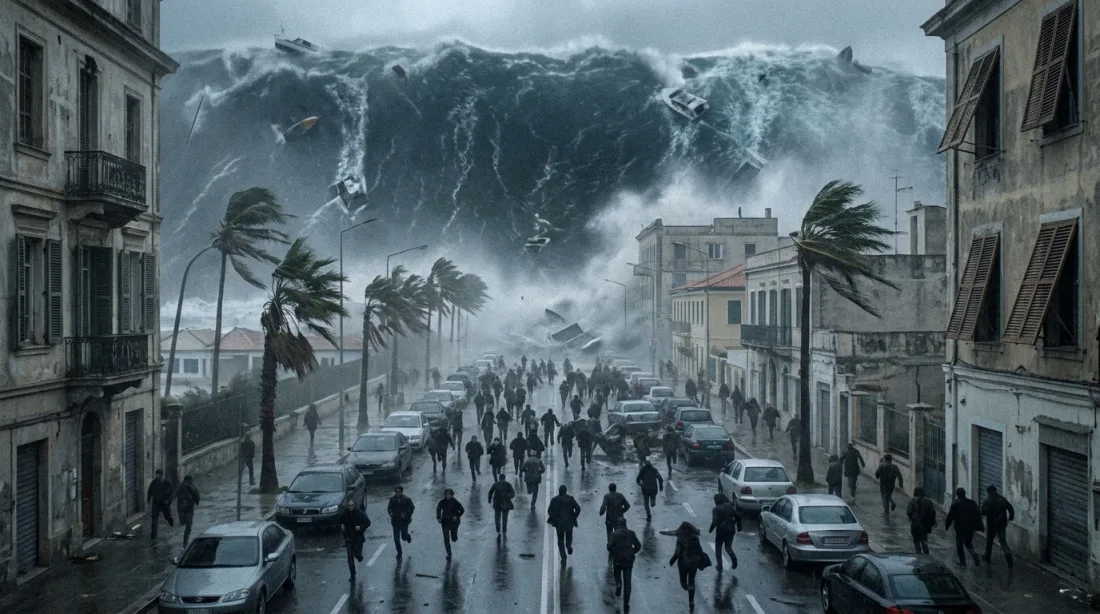
Put the threat in the still, already touching the city. A wave that arrives later never looks big enough.

Wide shot down a coastal city boulevard in grey storm light: palms bent in the wind, hundreds of people running inland between abandoned cars, shutters banging. At the far end of the street, rising above the seafront buildings, a colossal dark wall of water taller than the towers, its face streaked with foam and carrying boats and debris on the crest, already swallowing the first block. Shot on a 24mm lens at f/5.6, documentary disaster realism, cold desaturated storm palette, spray in the air, film grain, horizontal 16:9.
2

Shot one, the wave hits the seafront

Kling 3 Pro, image to video 5 seconds, starts from the still above, 20.000 points

The closing frame carries over, so the boulevard stays the same boulevard.

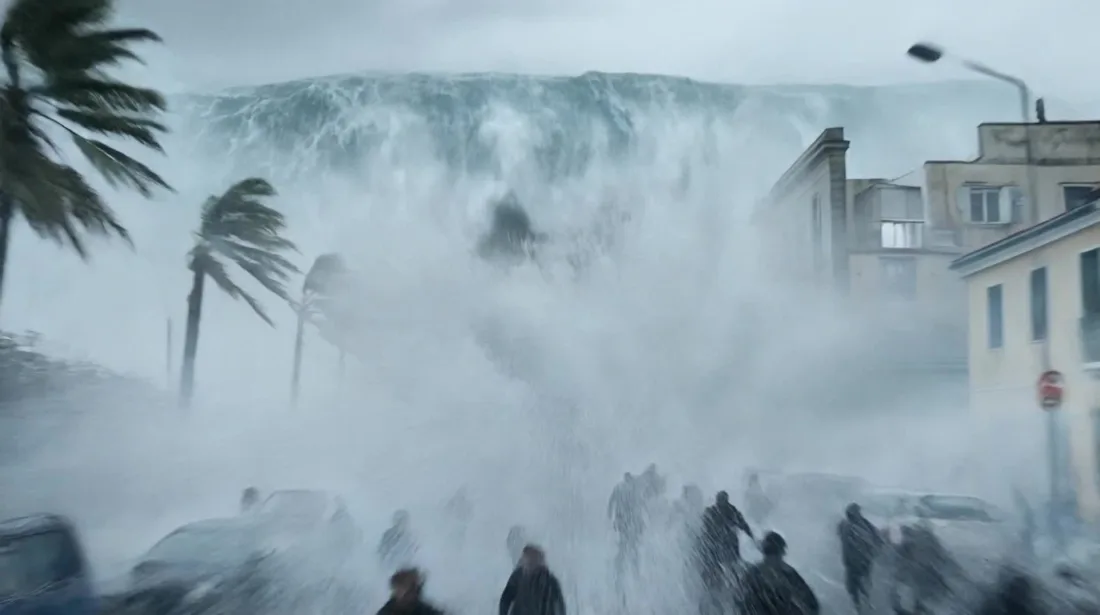
Continuing the same unbroken shot with no cut: the camera flies fast and low down the boulevard between the running crowds while the wall of water crashes into the seafront towers behind them, glass and facades tearing away, the wave curling over the rooftops. Spray, palm fronds and debris blast past the lens. One continuous take, 5 seconds.

3

Shot two, the street goes under

Kling 3 Pro, image to video 5 seconds, starts from the frame above, 20.000 points

Water needs objects to read against: cars, buses, shopfronts, all named.

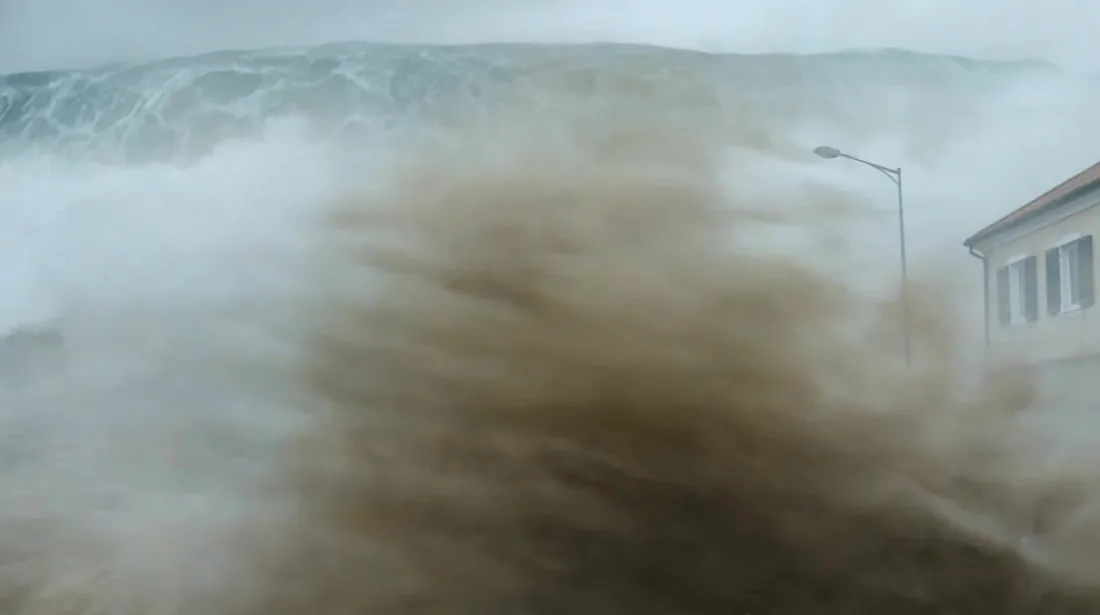
Continuing the same unbroken shot with no cut: the surge reaches the street and rolls up it, cars lifted and spun like toys, shopfronts imploding, people swept off their feet and carried in the churning brown water, a bus rolling over as the flood overtakes the camera and swallows the frame. One continuous take, 5 seconds.

4

Shot three, the drowned city

Kling 3 Pro, image to video 5 seconds, ends high and wide, 20.000 points

The rise at the end shows the scale of what happened without a word.

Continuing the same unbroken shot with no cut: the camera lifts up out of the churning water and cranes high over the drowned city, block after block under a brown sea with roofs, cranes and half toppled towers standing in it, rain falling and the storm light breaking on the horizon. The rise slows and ends on a still wide hero frame of the flooded skyline. One continuous take, 5 seconds.

What every shot refuses

One negative prompt runs on every clip. It is the same list each time, which is half the reason the film holds together.

cut, scene change, cartoon, video game look, plastic CGI, warped limbs, extra fingers, text, watermark, handheld shake, blurry mush, gore

The rules behind it

Show the threat in the first frame, already arriving.
Give water something to break: name the cars, the shopfronts, the palms.
Cold desaturated storm palette, said out loud, or it comes back sunny.
End by craning up. Height at the end is the only place height belongs.
Open every clip with "continuing the same unbroken shot with no cut".

Your own flood

The same setup, empty and waiting for your scene. Fill in the brackets, generate the still first, then run the clips one after another with the frame you liked as the start.

Continuing the same unbroken shot with no cut: [what the water does in these five seconds, and what it breaks]. The camera [flies low down the street / is overtaken by it / lifts up out of the water]. One continuous take, 5 seconds.