Exit

IMPACT

A comet strike down one avenue: run, blast, and a slow rise over the burning city.

All films
Disaster 0:15 16:9 65.000 points

What it was made with

Still engine Nano Banana Pro
Film engine Kling 3 Pro
Shots 3 chained, 5s each
Ratio 16:9
Genre Disaster
Lens 24mm, f/5.6

A disaster reads on the street, not in the sky. The still puts the camera low in the middle of the avenue with people running toward it, and the three clips do the three things a disaster needs: the approach, the blast, and what is left afterwards.

Shot by shot

1

The frame everything grows from

Nano Banana Pro 16:9 still, 5.000 points
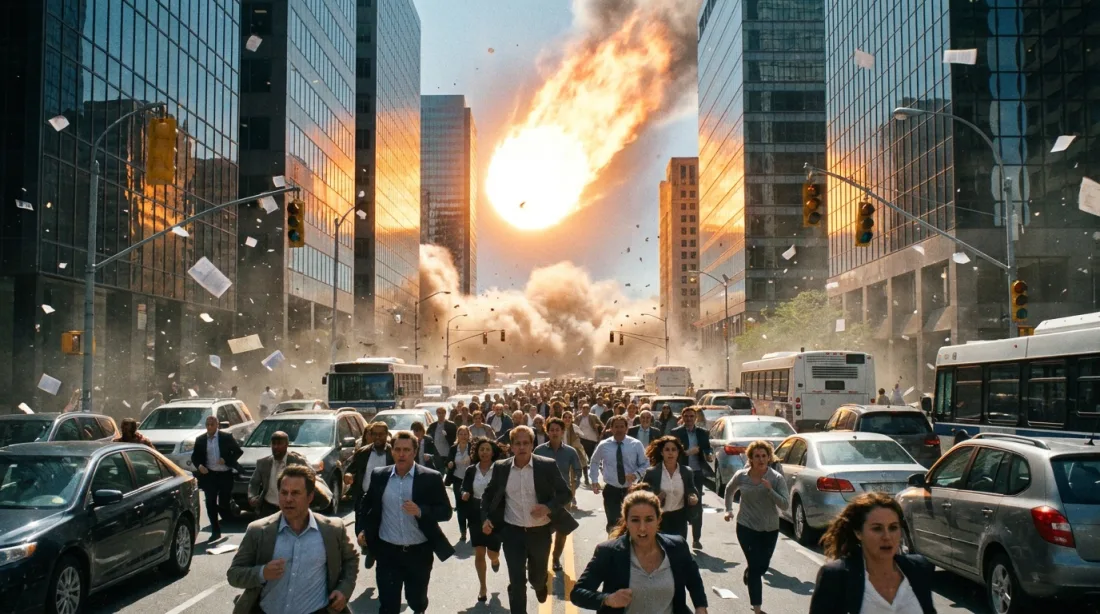
24mm and a low camera put the viewer in the crowd instead of above it.

Wide low angle down a packed downtown avenue at midday: glass towers on both sides, hundreds of people running toward camera between stopped cars and buses, papers and dust in the air, traffic lights swinging. Filling the sky above the far end of the street, an enormous comet burning white hot with a long fire trail and a shockwave ring of cloud around it, already close enough to light the buildings orange. Shot on a 24mm lens at f/5.6, documentary disaster realism, harsh daylight against the fire glow, dust haze, film grain, horizontal 16:9.
2

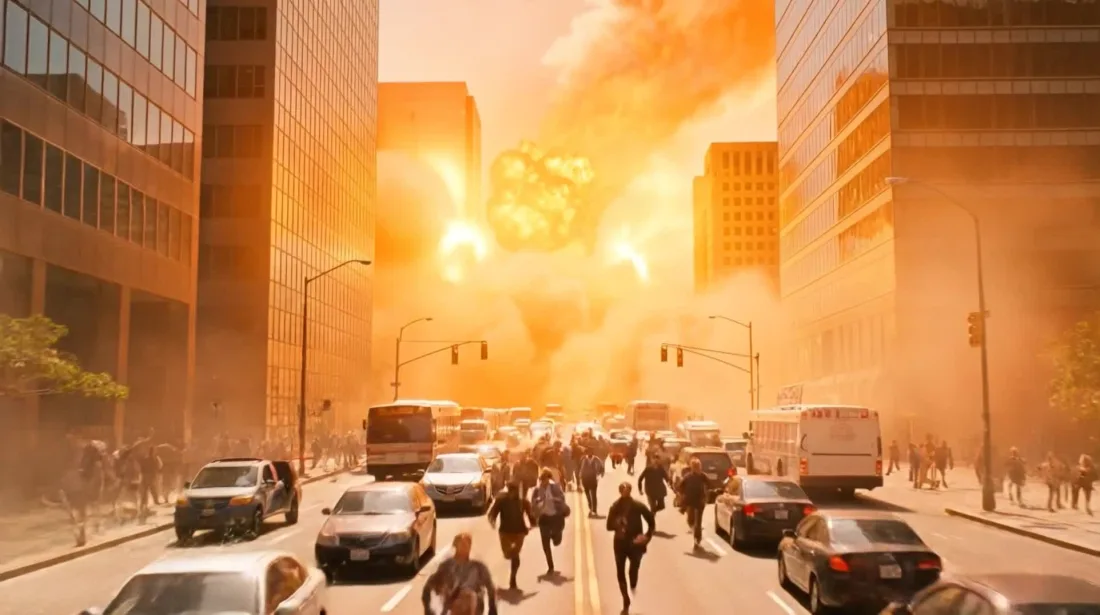
Shot one, the run

Kling 3 Pro, image to video 5 seconds, starts from the still above, 20.000 points

The closing frame carries over, so the same avenue keeps burning in the next clip.

Continuing the same unbroken shot with no cut: the camera flies fast and low down the middle of the avenue between the running crowds and the stopped cars, past shattering shop windows, while the comet grows in the sky ahead and the whole street turns orange. Papers, dust and birds blast past the lens. One continuous take, 5 seconds.

3

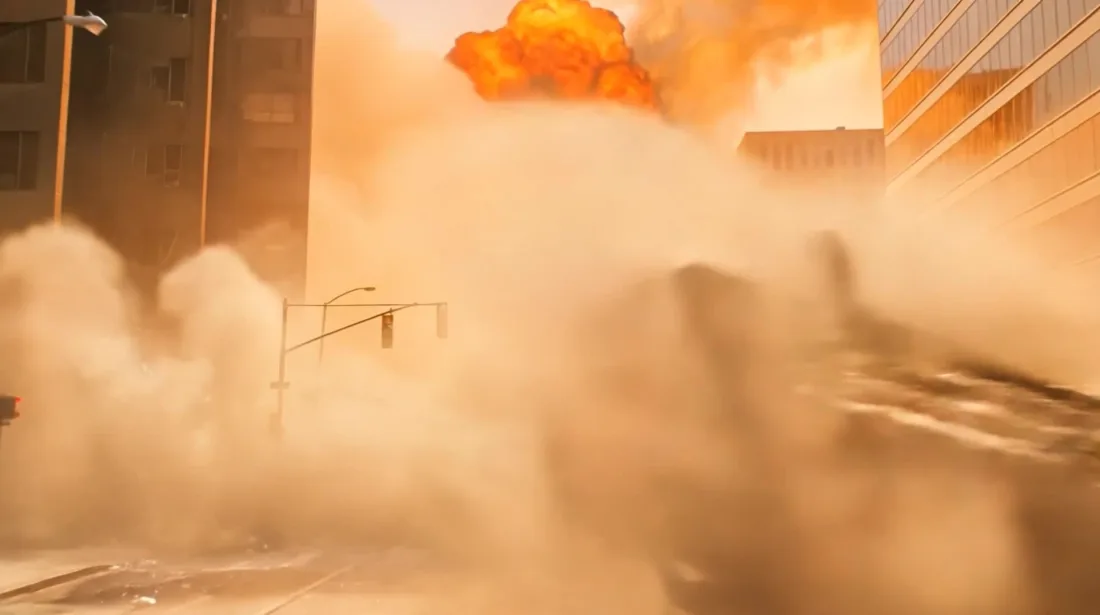
Shot two, the blast

Kling 3 Pro, image to video 5 seconds, starts from the frame above, 20.000 points

The blast is described as a sequence, window by window, so it does not arrive all at once as mush.

Continuing the same unbroken shot with no cut: the comet strikes beyond the far towers and a white shockwave front races down the avenue toward camera, glass exploding out of every window in sequence, cars and buses lifted and tumbling through the air, people thrown off their feet and swept along, street signs and debris flying past the lens as the blast reaches the camera. One continuous take, 5 seconds.

4

Shot three, what is left

Kling 3 Pro, image to video 5 seconds, ends on the skyline, 20.000 points

The last clip is quiet on purpose. Smoke, embers, a still skyline.

Continuing the same unbroken shot with no cut: the camera is carried upward on the blast, rising above the burning city through smoke and drifting debris, block after block on fire below, a vast mushroom of ash climbing in the distance and embers falling like rain. The rise slows and ends on a still wide hero frame of the burning skyline. One continuous take, 5 seconds.

What every shot refuses

One negative prompt runs on every clip. It is the same list each time, which is half the reason the film holds together.

cut, scene change, cartoon, video game look, plastic CGI, warped limbs, extra fingers, text, watermark, handheld shake, blurry mush, gore

The rules behind it

Keep the camera at street level. Height turns a disaster into a weather report.
Describe destruction in order, one thing knocking over the next.
Ask for documentary disaster realism, and put "gore" in the negative prompt.
Let the last clip slow down. Three loud clips in a row read as noise.
Open every clip with "continuing the same unbroken shot with no cut".

Your own disaster

The same setup, empty and waiting for your scene. Fill in the brackets, generate the still first, then run the clips one after another with the frame you liked as the start.

Continuing the same unbroken shot with no cut: [what happens in these five seconds, in the order it happens]. The camera [flies low down the street / holds as the blast reaches it / is carried upward]. One continuous take, 5 seconds.